For many adults with ADHD, attention can be inconsistently accessible on demand.
It’s not a deficit of effort or character, but a difference in the brain systems that regulate attention in real time.
At work, this can translate into a day that feels harder than it “should”’. This is not because the person isn’t capable, but because the brain’s access to attention and activation fluctuates.
In a study of 117 FLOWN users with suspected or diagnosed ADHD, virtual body doublingwas associated with faster task re-engagement and more consistent focus, making the workday feel more manageable.
Among surveyed participants who used virtual body doubling, three shifts stood out:
- Sustained focus more than doubled
- Anxiety reduced by ~30%
- Life satisfaction increased by +2.5 points on average
“This research is vital in showcasing the numerous benefits of this level of support especially when waiting lists and resources are currently so inaccessible.
For many adults with ADHD, the hardest part of work isn’t ability or motivation, it’s getting started and staying anchored to a task. Body doubling creates that sense of not being alone with your workload.”
– Jamie Johnston, Founder ND dating app Mattr
Key findings at a glance
In a self-report survey study of 117 adult FLOWN users with suspected or diagnosed ADHD, respondents described clear pre-to-post shifts after incorporating virtual body doubling into their work routines:
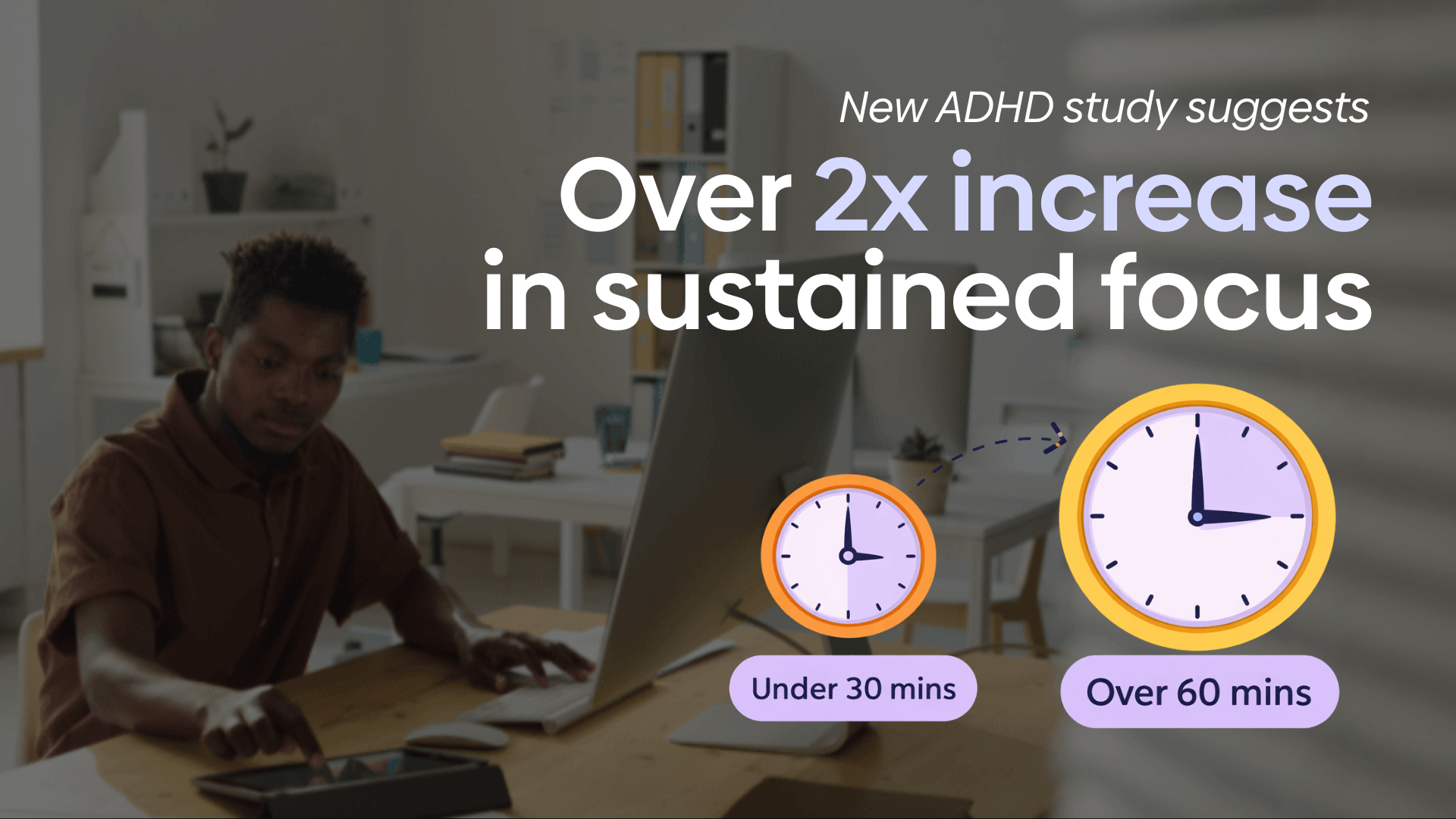
- Over 2x increase in sustained focus: Most participants shifted from focusing for under 30 minutes (short, fragmented) to over 60 minutes (longer, uninterrupted)
- Average 30% reduction in anxiety (ONS 0-10): A notable reduction that may have downstream benefits
- Life satisfaction increased by +2.5 points on average (0-10 scale): For context, UK wellbeing appraisal frameworks treat changes on this scale as a meaningful unit of impact (a 1-point change sustained for a year is used as a standard wellbeing unit in policy analysis).
This data suggests body doubling may be a practical, non-clinical support that helps some adults with ADHD, helping them sustain focus without medication, feel better day to day, and report lower anxiety.
Virtual body doubling with FLOWN is immediately available, with no referral or diagnosis required, which is crucial given waiting lists being years long for assessment and treatment.
“This research is so important. When ADHDers live and work alone, it’s so easy to let procrastination and distraction keep us from meaningful connection and deep work”
– Bontle Senne, Co-author of ND Lovers Club and author of The ADHD Boss
“Body doubling is an extremely effective way of taking a person with ADHD’s brain out of what I call ‘screensaver mode’. Where a neurotypical person might just do something, for an ADHDer that could be a sequence of ten different steps. Body doubling helps us follow them all through so we can have that sense of achievement.”
– Sara Akrill, co-author of ND Lovers Club and founder of Wired Differently
“This research is extremely important because for too long, workplace support for ADHD has focused narrowly on individual willpower or formal accommodations that can be difficult to access. Body doubling is an easy, practical, low-cost, and highly adaptable strategy that can be implemented across almost all industries and work environments.”
– Kit Slocum, Neurodiversity Lead and ADHD Coach at FLOWN
What is body doubling?
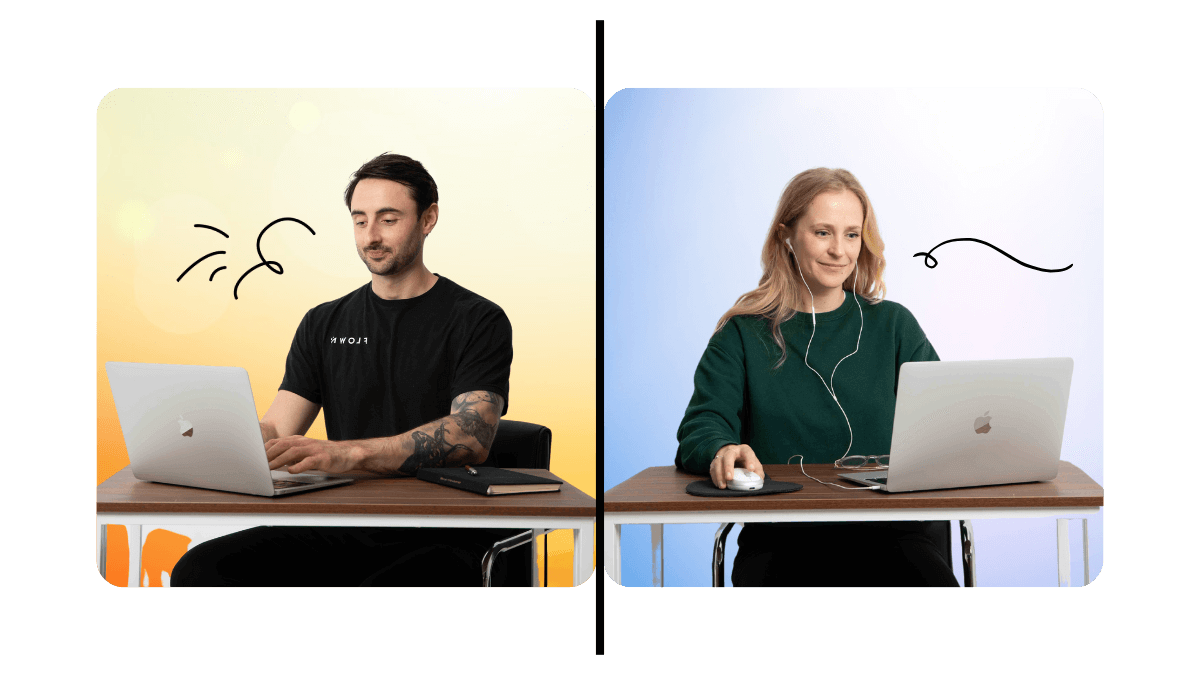
Body doubling is the practice of working alongside another person, not to collaborate, but simply to be present with each other. For many people with ADHD, having someone else in the room (or on screen) creates just enough ambient accountability to make starting easier, and staying focused feel less like a battle.
It’s not a hack. It’s how a lot of ADHD brains are wired to work best.
Virtual body doubling takes this further, giving you access to a calm, structured co-working environment whenever you need it, from wherever you are. No commute, no small talk required.
At FLOWN, we host live focus sessions throughout the day where you join a small group, share your intention for the session, and work quietly alongside others.
Study methodology
Who the study covered
This was a study on FLOWN users with suspected or diagnosed ADHD based in the UK. Over half (52%) of participants were waiting for ADHD assessment or treatment.
- Total respondents: 148
- Modeling cohort: 117
Not every question applied to every person, so the modeling only includes people where the outcome was clearly relevant and actually observed. - Recall period: 12 weeks
The survey used conditional branching to route people to relevant questions based on their work/study and neurodivergence status.
What was measured
The study captured self-reported before-and-after measures and functional outcomes designed to reflect real-world ADHD-related work and wellbeing challenges.
- Before-and-after measures: focus duration, and ONS personal well-being ratings for anxiety (0–10) and life satisfaction (0–10)
- Functional outcomes: workdays missed or uncompleted, job retention indicators, GP and mental-health contacts avoided
Impacts were modeled conservatively in line with HM Treasury Green Book guidance, with deadweight and optimism bias applied and wellbeing values drawn from HMT-approved sources. FLOWN was used as the delivery platform and commissioned this evaluation.
Outcome #1 – Sustained focus more than doubled
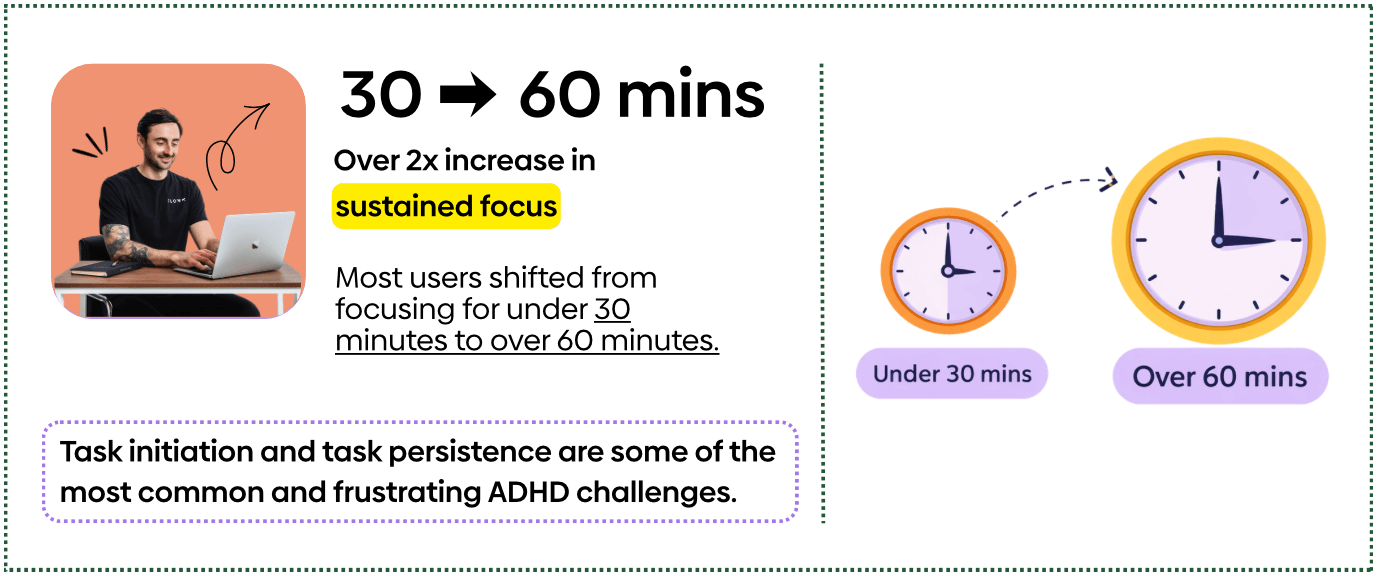
Task initiation and task persistence are some of the most common and frustrating ADHD challenges.
We asked participants to report how long they could stay focused, and how easy it was to sustain focus on tasks they would normally avoid, before-and-after using FLOWN for 12 weeks.
The results suggest a meaningful impact on the participant’s ability to remain focused:
- Focus before FLOWN: 81% reported they couldn’t focus beyond 30 minutes.
- Focus after FLOWN: 52% reported sustaining focus for 60+ minutes.
Put simply: respondents reported more than double the sustained focus once they began virtual body doubling with FLOWN.
Consistent with the focus-duration data, 69% of respondents said virtual body doubling with FLOWN made it ‘much easier’ to focus.
“It’s helped me with everything!!! Work, university research and deadlines, dance practice, hobbies… I was able to balance work with applying for a university masters course and applying for several scholarships which was a success!”
— Study participant
“Connection in a gentle way with real people. It’s online, but it feels personal and meaningful.”
— Study participant
“The key thing to FLOWN for me [is] the accountability. When I state what I’m planning to do, I actually have to have worked out what beforehand.”
— Study participant

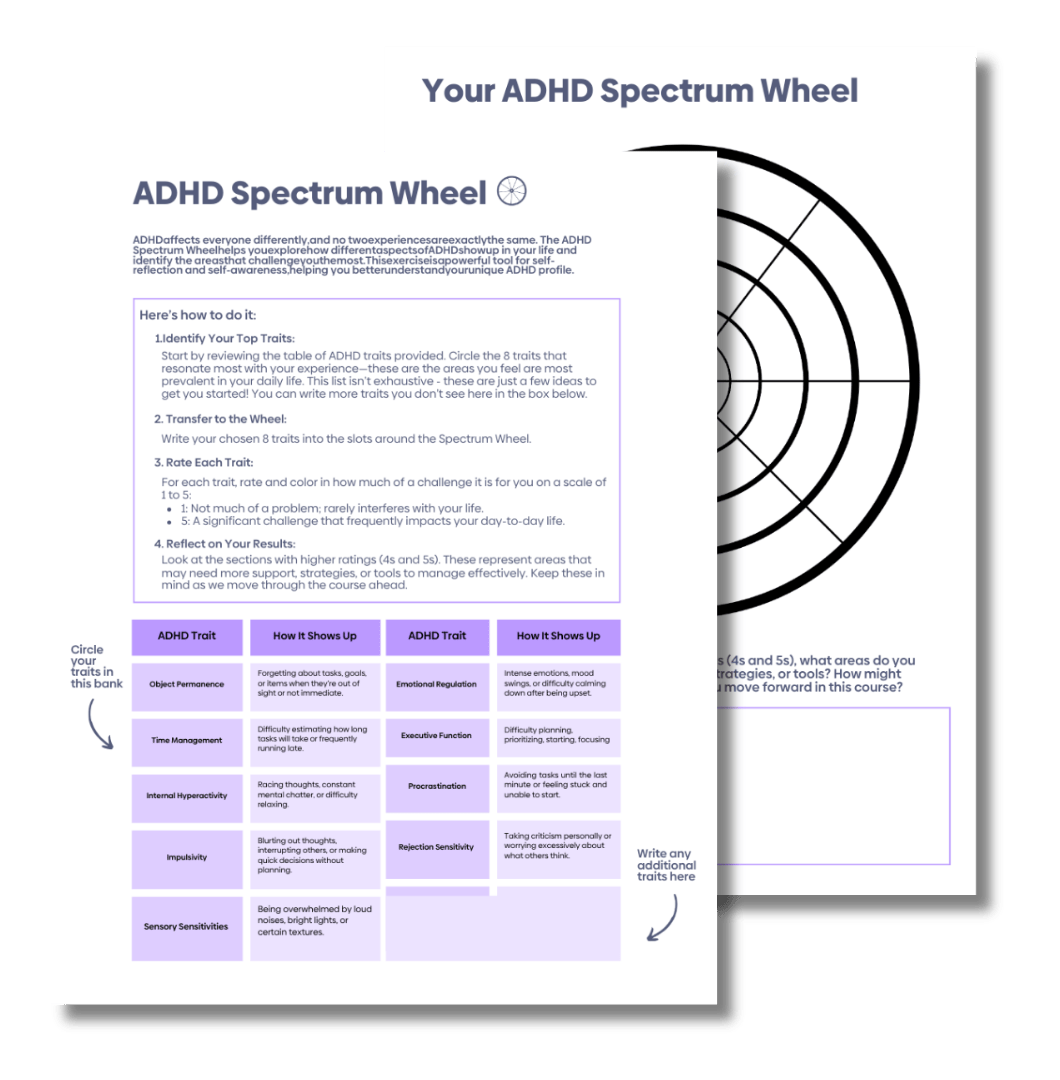
ADHD looks different on everyone. What does yours look like?
The ADHD Spectrum Wheel helps you map your unique ADHD profile, from time blindness to emotional intensity, so you know exactly where to focus your energy.
Outcome #2 – Anxiety scores fell by 30%
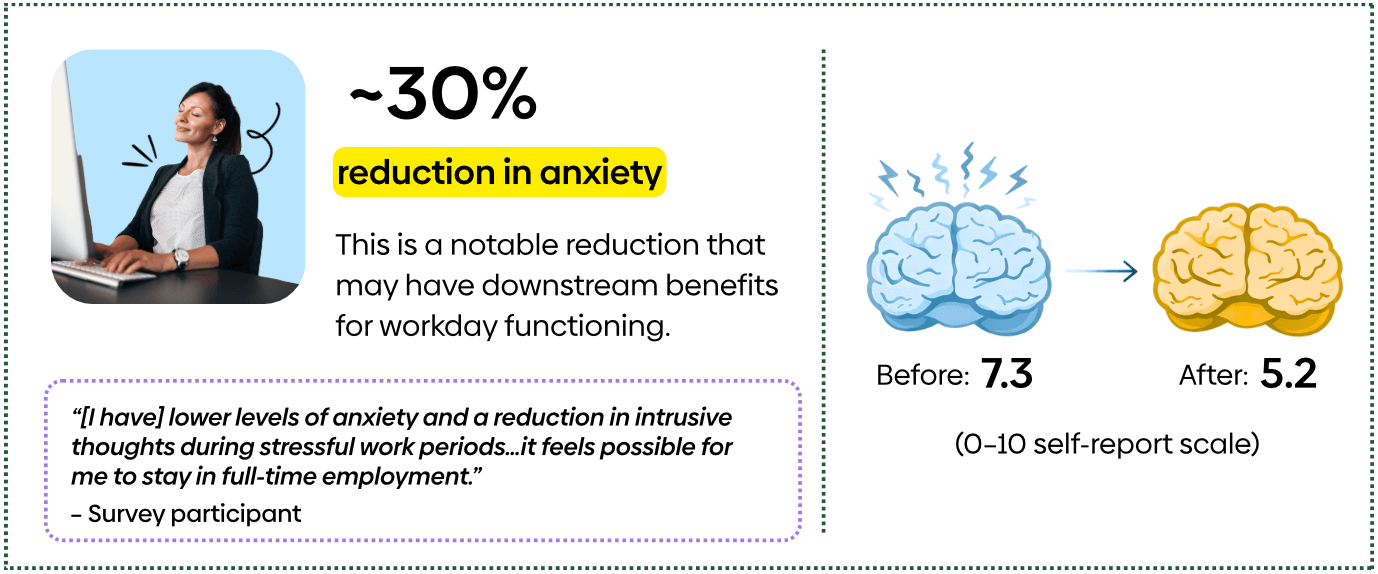
Respondents were asked to map their general anxiety levels before-and-after using FLOWN. They were given a scale from 1 (not at all anxious) to 10 (completely anxious) to score their feelings on.
The findings recorded an average 30% reduction in anxiety across 117 respondents, after 12-weeks of attending virtual body doubling sessions with FLOWN.
- Anxiety levels before FLOWN: 7.25 / 10
- Anxiety levels after FLOWN: 5.07 / 10
- Average reduction: 2.18 points (~30%)
While we don’t benchmark these results against clinical treatment trials, the magnitude of change is large enough to matter. Reductions in anxiety at this level have meaningful downstream effects on day-to-day functioning and wellbeing, comparable to the effect of talking therapies.
“I’m actually excited to focus on tasks when before I would feel anxious thinking about it… I feel much more capable and confident. Less like there is something wrong with me.”
— Study participant
“Lower levels of anxiety. Reduction in intrusive thoughts during stressful work periods… It feels possible for me to stay in full time employment.”
— Study participant
“Working in an office is not possible for me without debilitating stress, fatigue and migraines from masking. FLOWN allows me to plan my day more effectively. I feel less isolated and part of a community.”
— Study participant
Outcome #3 – Life satisfaction increased (+2.5, ONS 0-10)
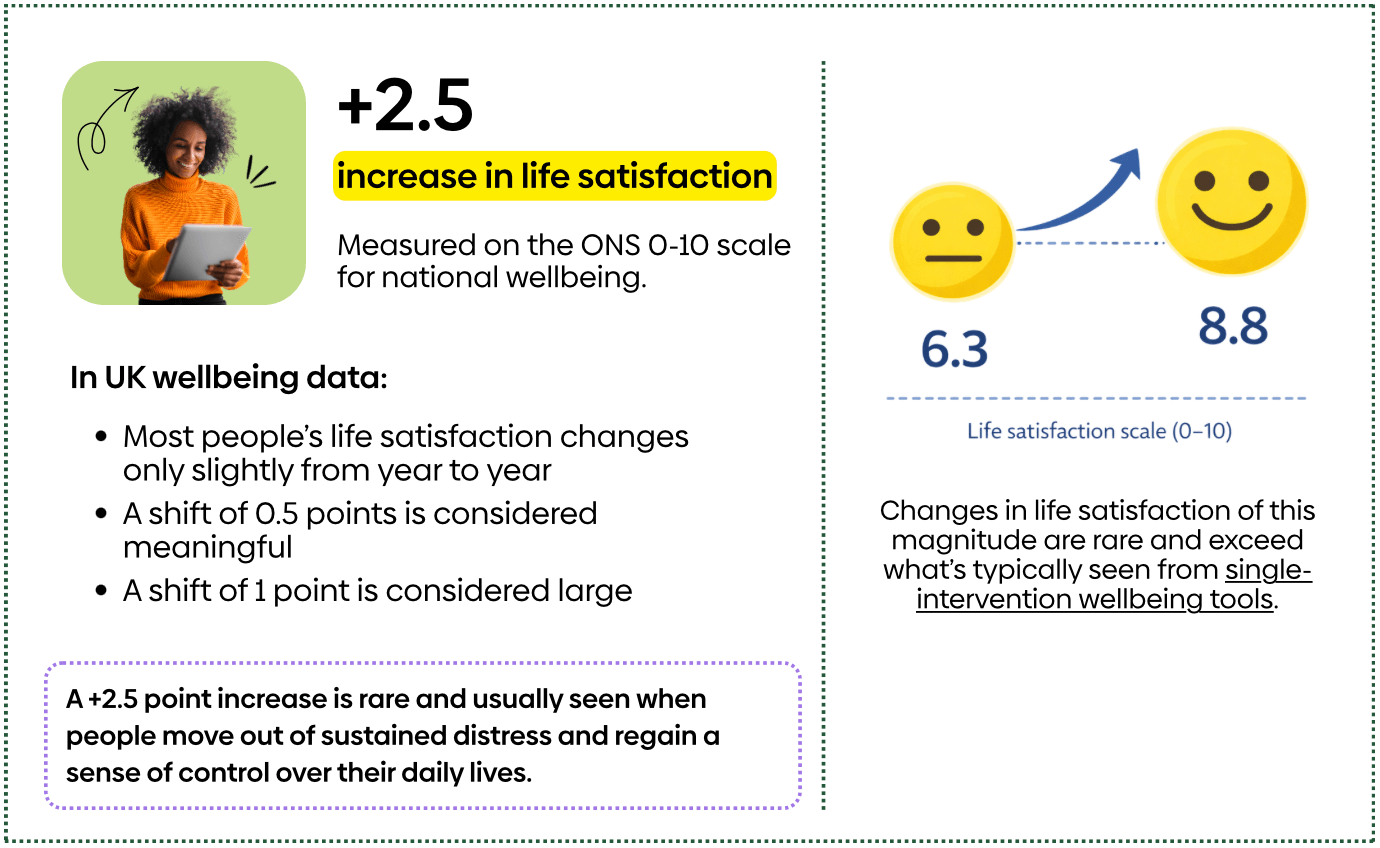
We asked respondents to rate their overall life satisfaction using the UK Office for National Statistics (ONS) 0–10 scale, before-and-after attending body doubling sessions with FLOWN.
Across paired responses, the average score increased by an average of 2.5 points.
- Life satisfaction before FLOWN: 6.3/10
- Life satisfaction after FLOWN: 8.8/10
- Average increase: 2.5 points (~40%)
In UK wellbeing data, most people’s life satisfaction changes only slightly from year to year.
- A shift of 0.5 points is considered meaningful
- A shift of 1 point is considered large
- A+2.5 point increase is rare and usually seen when people move out of sustained distress and regain a sense of control over their daily lives.
This is the first time virtual body doubling has been associated with such significant improvements to life satisfaction. Improvements of this magnitude are rare and exceed what’s typically seen from single-intervention wellbeing tools.
“I feel seen and understood. I feel that it’s okay to be the real me. And I get stuff done! Thank you FLOWN you really are a (quality of) life saver!”
— Study participant
“I have been able to achieve bigger goals and my self esteem has improved.”
— Study participant
“I have a routine now, which really helps my productivity and wellbeing.”
— Study participant
“I look forward to joining a flock and getting stuck into my tasks… I feel more confident in my abilities at work and am more motivated to keep going.”
— Study participant
Outcome #4 – Seven weeks regained per year
In practice, ADHD can create a mismatch between intention and output. People can be motivated and capable, yet still end the day with unfinished tasks and disrupted plans.
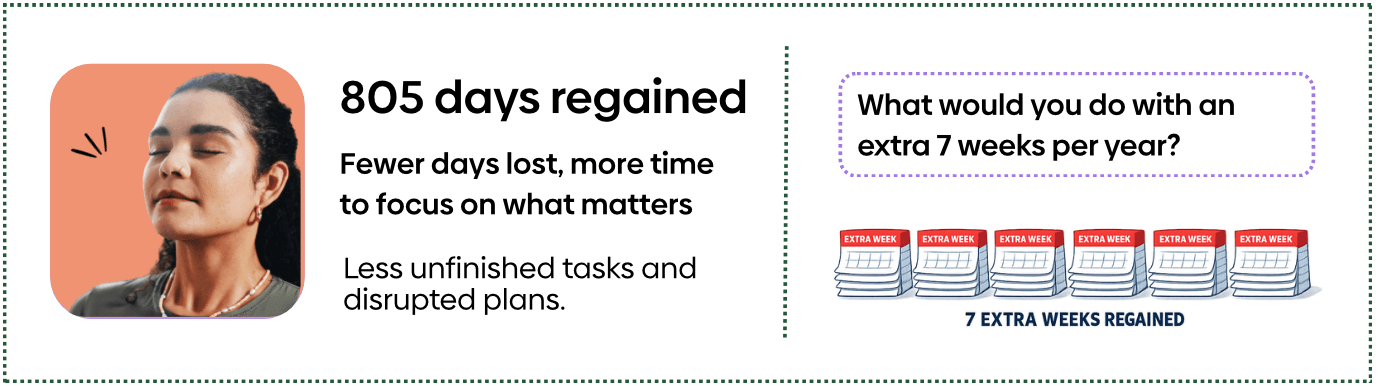
After using FLOWN, together our respondents reported 805 workdays regained, which is about an extra day per person per week.
If we translate that into a yearly figure, that’s 3,220 workdays regained per year, or 52 days per year, or about 7 weeks per person per year.
What all this means is fewer days lost to missed work or work that couldn’t be completed, and more time to focus on what matters.
In this study, most people were actively working, with 88% employed or self-employed. These are self-reported outcomes from active users, not a controlled trial. Even so, they suggest a practical shift in day-to-day work functioning while using virtual body doubling.
“FLOWN makes me get up in the morning as I join an 8:30 Take Off session every day… It has helped me chalk off projects, and even get mundane things done like cleaning and decluttering…”
— Study participant
“I’ve been able to increase my freelance earnings (which had become unsustainably low – below the living wage) due to better focus.”
— Study participant
Outcome #5 – Fewer GP/NHS mental‑health contacts reported
The survey captured both a “contacts avoided” count and a self-report indicator of reduced service use.
After using FLOWN, respondents reported 84 GP or NHS mental-health contacts avoided over 12 weeks, which if projected across a full year, equates to 336 contacts avoided per year.
On the self-report question:
- 47% reported reduced GP/NHS use
- 73% reported reduced use when excluding respondents for whom GP use was not relevant
The takeaway here is that using FLOWN, a structured, non-clinical support model, can reduce pressure on primary care and mental-health services relevant in the context of years-long ADHD service backlogs.
“I have tried a LOT of tools for my ADHD for a number of decades, and FLOWN has been the single biggest life-saver / game-changer for me.”
— Study participant
“FLOWN means I can stay well and stay safe without medication AND I get stuff done meaning I’m a more productive member of society.”
— Study participant
Outcome #6 – Estimated annual value of outcomes ~£1.05m yearly
A Green Book–aligned appraisal approach (HM Treasury guidance) was used to translate respondents’ self-reported changes into a financial impact at societal and national level. Conservative assumptions were applied to reduce the risk of overestimation, and results were then presented across three lenses:
- Fiscal value (cashable savings to the state): ~£33,072 / year
- Economic value (productivity and earnings impacts): ~£481,726 / year
- Social value (wellbeing value, primarily via reduced anxiety): ~£538,074 / year
Across the 117-person modelling cohort, that totals £1,052,873 of indicative annual value, or ~£9,000 per person per year, on average.
Under the same conservative modeling assumptions, the estimated value returned per £1 invested is more than £37 in public:
- £1.18 fiscal
- £17.16 economic
- £19.16 social
Important: This report is based on early UK observational data and does not establish causality. Findings indicate promising associations between body doubling and improved outcomes, warranting further research.
“FLOWN is a low cost, low intervention from employer tool that could save thousands for businesses in lost hours and revenue… I wish they knew how powerful it was for mental health outcomes for those of us who are isolated, or working remotely/hybrid…”
— Study participant
“For example, thanks to FLOWN, I have been able set up my own business and bid for almost £190,000 in business contracts in my first year of operations…”
— Study participant
Limitations to keep in mind
These findings come from a real-world, before–after survey of engaged FLOWN users, so they’re best read as associations rather than definitive cause and effect.
Without an external control group and with self-report measures that can be shaped by recall, the exact size of the effect may vary. Still, the direction and consistency of the results are encouraging, and provide a clear foundation for more rigorous evaluation to understand how body doubling can support adults with ADHD, including those waiting for formal assessment.
Key takeaways: Structure and accountability from body doubling reduce ADHD friction
In this study, FLOWN users with diagnosed or suspected ADHD reported:
- Longer stretches of sustained attention
- Lower anxiety
- Better work functioning
- Wider benefits to wellbeing and daily life
The results suggest that virtual body doubling on FLOWN has a meaningful impact on those with ADHD by providing practical scaffolding, structure and accountability.
Based on the data it could be particularly effective for remote workers, freelancers, entrepreneurs or solopreneurs, knowledge workers, creatives and students.’